Submitted by Kerry Summers on
Updated September 2026
By Kerry Summers (Content Marketing Coordinator, iVentiv)
Key Takeaways
- AI is shifting L&D from knowledge delivery to performance enablement
- Personalised learning could become increasingly learner-led
- AI simulations could dramatically increase opportunities for meaningful practice
- The role of the trainer is evolving rather than disappearing
- Learning success needs to be measured by outcomes, not activity
From Knowledge Delivery to Performance Enablement
For decades, one of the central roles of L&D has been knowledge transfer. Learning teams create content, trainers deliver it, and employees attend workshops or complete courses. The organisation then measures whether learning has taken place.
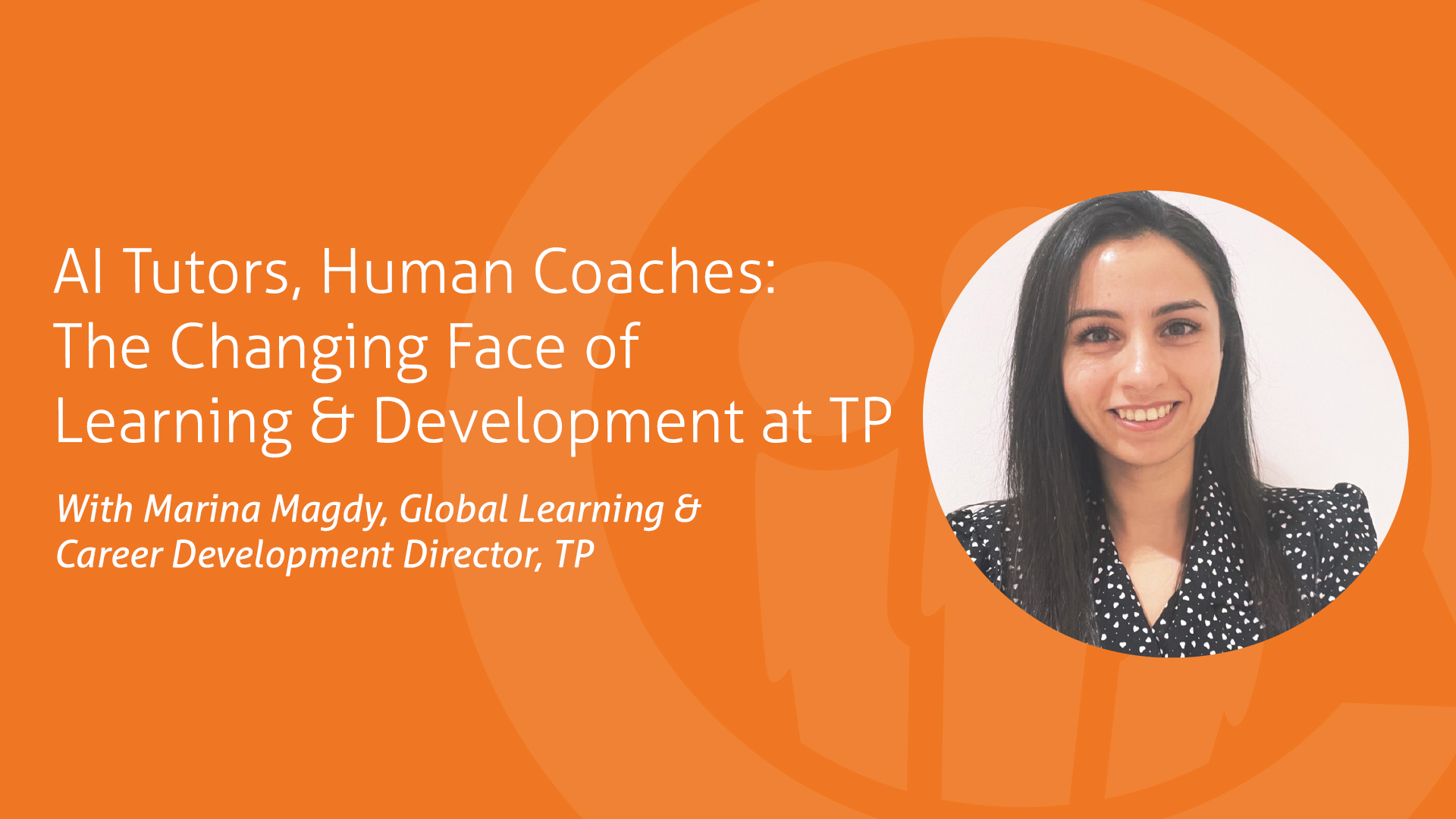
AI, as Marina discusses, challenges that model. She says that as AI becomes increasingly capable of answering questions, adapting content, and supporting practice, it can take on more of the “heavy lifting” associated with knowledge delivery.
As AI capability grows, Marina argues that the role of the human becomes infinitely more valuable.
Instead of spending the majority of their time transferring information, trainers and Learning professionals can increasingly focus on becoming performance coaches. Their value shifts towards areas in which human capability remains particularly important: empathy, complex problem-solving, and behavioural resistance.
AI, Marina highlights, can increasingly help employees with the “what” and the “how” of learning, which gives human learning professionals the opportunity to focus much more deliberately on the “why”:
- Why does this skill matter?
- Why does behaviour need to change?
- Why is this relevant to the employee, their team and the organisation?
For years, many L&D teams have been trying to move beyond being seen as a content provider or order-taker, and, as postulated by Marina, AI may create an opportunity to accelerate that transition.
Moving from Trainer-Led Learning to Learner-Led Development
‘Personalised learning’ has been on the minds of Learning professionals for a while, but historically, as Marina argues, personalisation has largely meant creating different learning experiences for employees.
AI could shift the balance: rather than Learning teams determining every element of the journey, employees may gain much greater agency over what they need, how they develop, and which learning experience works best for them.
That represents a significant change for Learning functions because it moves personalisation away from simply offering employees more content. Instead, it gives employees greater control over how they reach ‘mastery’.
For Marina:
“Perhaps the future of personalised learning is not L&D creating ever more personalised content. Perhaps it is giving the learner more control.”
- Marina Magdy, Global Learning & Career Development Director, TP
AI Simulations Could Change the Economics of Practice
According to Marina, one of the clearest examples of this shift is the use of AI simulations.
Traditional classroom role-play is a perfect example of this shift in action. In this situation, a small number of learners practise while everybody else watches. A trainer has limited time to observe, provide feedback and repeat the exercise.
For some learners, performing in front of colleagues or managers can also introduce a level of social anxiety that affects the experience.
AI-enabled simulations change that dynamic by engaging multiple learners in practice simultaneously. Marina argues that this massively frees up time; employees can repeat the experience, make mistakes, experiment with different approaches, and can continue their practice until their confidence improves.
In this way, Marina explains that the implications for learning quality and scale are huge, because practice is no longer as constrained by the number of trainers available or the number of hours in a workshop. Learners can also receive more consistent and immediate feedback.
Perhaps most importantly, the learner is given permission to fail in a lower-pressure environment, giving employees invaluable experiences and opportunities to apply knowledge, test themselves, and practise.
For Learning leaders managing development across large, geographically dispersed workforces, AI simulation therefore presents an intriguing possibility: can organisations dramatically increase the amount of meaningful practice available to employees without increasing trainer hours at the same rate?
The Evolution of the Human Trainer
The growth of AI tutors, simulations and adaptive learning naturally led Marina to discuss an important question: where does this leave the trainer?
The answer emerging from the discussion is not that human expertise disappears; it is instead that the skills associated with that expertise need to evolve. If AI handles more content delivery and routine practice, trainers have an opportunity to focus on coaching, behaviour, context and performance.
But they will also need to understand the technology they are working alongside, and it’s this AI literacy that then becomes part of Learning capability itself. Learning professionals, Marina tells us, need to understand when AI adds value, where it may fall short and when human intervention is required.
That shift also creates a clear principle for human oversight: AI can recommend but it is ultimately humans who should decide.
Decisions concerning someone's career progression, compensation or job security should not simply be delegated to an algorithm. Instead, Marina argues, human judgment remains essential.
Critically, Marina says:
“Stop designing courses. Start designing outcomes.”
- Marina Magdy, Global Learning & Career Development Director, TP
If trainer capability frameworks remain centred primarily on content delivery, they may increasingly reflect yesterday's Learning function rather than tomorrow's.
The L&D Shift From Designing Content to Designing Outcomes
Perhaps one of the most significant implications of AI, according to Marina, is a change in what Learning teams actually design.
Historically, much of the function's effort has gone into building content such as courses, workshops, and e-learning. But in a more flexible learning ecosystem, the role of L&D, she highlights, could shift from designing content to designing outcomes.
If an employee can reach the required level of mastery through a workshop, an e-learning module, an AI tutor, a simulation or a conversation with a human expert, does it matter which route they took?
Marina stipulates: potentially, much less than it once did. What matters instead is whether they achieved the required capability.
Assessment, therefore, becomes central to the learning ecosystem. If employees take different routes, organisations need confidence that those routes ultimately lead to a consistent standard.
Measuring Learning Activity Versus Measuring Change
That shift towards outcomes also challenges one of L&D's longest-standing habits: measuring activity.
Marina explains that metrics such as completion rates, learning hours, and attendance can tell Learning leaders whether something happened, but what they do not necessarily tell them is whether anything changed or improved.
A much more powerful starting question is: what are you trying to improve?
Marina goes on to say that when a business stakeholder requests a learning intervention, that question should come before content development begins:
- What behaviour should change?
- What capability needs to improve?
- What business problem are we trying to influence?
The answer should help define how success is measured.
Arguably, moving from reporting learning activity towards demonstrating business impact changes the conversation by positioning Learning not as a provider of courses, but as a contributor to organisational performance.
Critically, Marina argues that:
“The more L&D shifts from what people completed to what changed as a result, the closer Learning gets to the language of organisational performance.”
- Marina Magdy, Global Learning & Career Development Director, TP
Make Your Learning Offering Top Choice
If you have to make learning mandatory, has the learning product failed?
This is a question Marina circles back to: If employees are not actively looking for learning that helps them solve problems, perform better or build useful skills, is the problem really learner engagement? Or is it possible that the learning itself is not sufficiently connected to what employees need?
AI will undoubtedly introduce new tools into L&D, but for Marina, its most important impact may be that it forces the profession to reconsider assumptions that existed long before generative AI arrived:
- Who controls the learning journey?
- What is the trainer there to do?
- How should learning success be measured?
- What is the Learning function there to achieve?
For the iVentiv community, perhaps the most interesting question is not “How should we use AI in L&D?”
But instead:
“What should the Learning function become when AI can do many of the things the traditional model was built around?”
- Marina Magdy, Global Learning & Career Development Director, TP
FAQs
How is AI changing the role of Learning and Development?
Marina argues that AI could fundamentally change L&D by taking on more of the work traditionally associated with knowledge transfer. As a result, Learning teams have an opportunity to move beyond primarily creating and delivering content towards enabling employee performance.
Human Learning professionals, she says, can spend more time helping employees understand ‘why’ behaviours need to change, coaching them through difficult situations and addressing challenges where empathy, context and human judgement remain particularly important.
Will AI replace human trainers and Learning professionals?
Marina explains that AI is more likely to change the role of trainers rather than eliminate it. As AI becomes capable of handling more information delivery and routine practice, she suggests that human Learning professionals can increasingly focus on areas such as coaching, behaviour change, empathy and complex problem-solving.
Marina also underscores that this means the capabilities expected of trainers are likely to evolve; Learning professionals will need sufficient AI literacy to understand where AI can add value, where its limitations lie and when human intervention is necessary.
How can AI simulations improve workplace learning?
AI simulations, Marina explains, can significantly increase the amount of practice employees receive. In traditional classroom role-play, only a limited number of participants may be able to practise at once, while trainers have finite time to observe performance, give feedback and repeat exercises.
AI-enabled simulations, on the other hand, allow multiple learners to practise simultaneously. Marina highlights that Employees can repeat scenarios, try different approaches, make mistakes and continue practising until their confidence and capability improve.
They can also provide a lower-pressure environment for learners who may feel uncomfortable performing in front of colleagues or managers, creating more opportunities to apply knowledge and experiment while reducing some of the constraints associated with trainer availability and classroom time.
Why is human oversight still important when using AI in Learning and Development?
AI can support recommendations, learning pathways, practice and feedback, but Marina argues that important decisions should ultimately remain with people.
This is particularly important where learning data or AI-generated recommendations could influence an employee's career progression, compensation or job security. These decisions, Marina says, involve context, judgement and consequences that should not simply be delegated to an algorithm.
Effective human oversight, Marina says, means knowing when automated recommendations are useful, where additional scrutiny is required and when a person needs to intervene.
What does "stop designing courses, start designing outcomes" mean for L&D?
According to Marina, this means beginning with the capability or performance result an organisation wants to achieve rather than automatically starting with a course.
Traditionally, she explains, significant L&D effort has gone into creating workshops, programmes and e-learning content. In a more flexible learning ecosystem, however, employees might achieve the same level of mastery through very different combinations of experiences, including workshops, AI tutors, simulations, digital learning or conversations with experts.
From Marina’s perspective, the specific learning format becomes less important than whether the employee reaches the required standard. L&D therefore shifts its attention from designing individual pieces of content towards designing the outcomes, assessment standards and learning ecosystem that support capability development.
How should organisations measure the impact of learning?
Marina argues that organisations should increasingly measure what changed as a result of learning rather than relying primarily on measures of participation.
Metrics such as completion rates, attendance and learning hours remain useful for showing whether an activity took place, but, as she describes, they do not necessarily demonstrate whether employees became more capable or whether organisational performance improved.
Marina suggests beginning with questions such as: What behaviour needs to change? What capability needs to improve? What business problem are we trying to influence?
Once that intended outcome is understood, organisations can define measures that reflect the change they actually want to achieve. This, Marina highlights, can help reposition L&D from a provider of learning activity to a contributor to organisational performance.
Marina is the Global Talent Development Director at TP, and leads a range of initiatives that drive business growth through strategic talent development and management. Her expertise focuses on designing and delivering global talent development programs and career development initiatives. Marina will be leading the discussion at iVentiv’s virtual Learning Futures Dubai on 27 October 2026. Register to join her now.