Submitted by Richard.Parfitt on
Updated June 2026
By Richard Parfitt (Marketing Director, iVentiv)
Key Takeaways
• Leadership and Executive Development remains the top priority, selected by 64% of respondents.
• AI has become an embedded focus for Learning and Talent leaders, rising to 62%.
• Reskilling and upskilling remain central as organisations continue moving towards skills-based models.
• Learning Culture continues to be a priority, with leaders focused on shared ownership of development.
• Change Management remains critical as organisations adapt to AI, workforce transformation, and ongoing uncertainty.
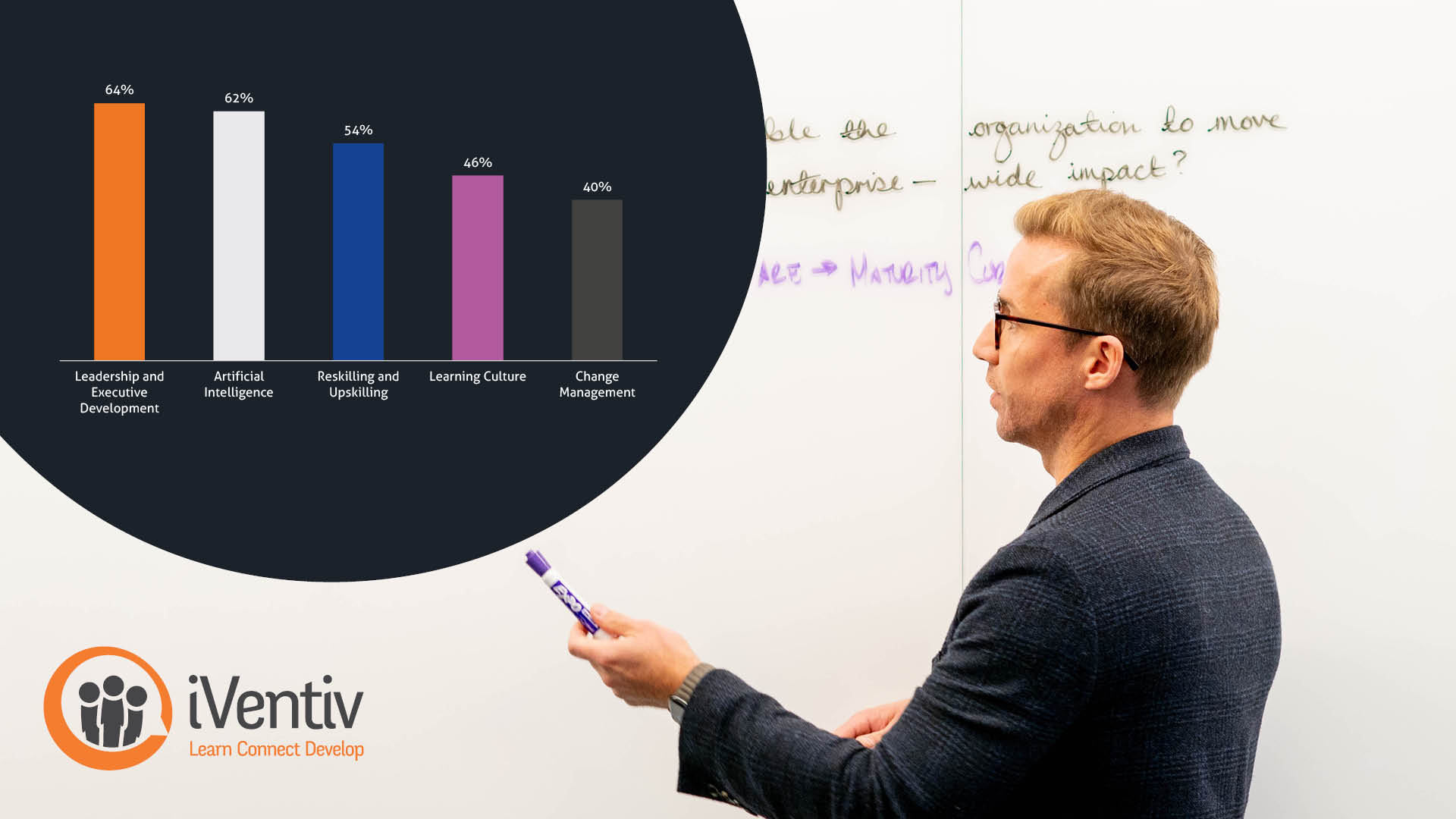
At the start of 2026, we shared the top priorities for Global Heads of L&D, Talent, and Executive Development in the annual iVentiv Pulse Report.
Six months into 2026, we can now share a brief update on the top priorities as selected by attendees at iVentiv events so far this year. Already, more than 250 senior L&D and Talent leaders in multinational organisations have told iVentiv about the most important topics for their function right now.
In this blog, you can see the top topics, with quotes from survey respondents and analysis on the trends behind the numbers.
The Top Five Priorities for Heads of Learning and Talent in 2026
So far in 2026, the top five priorities remain unchanged since January:
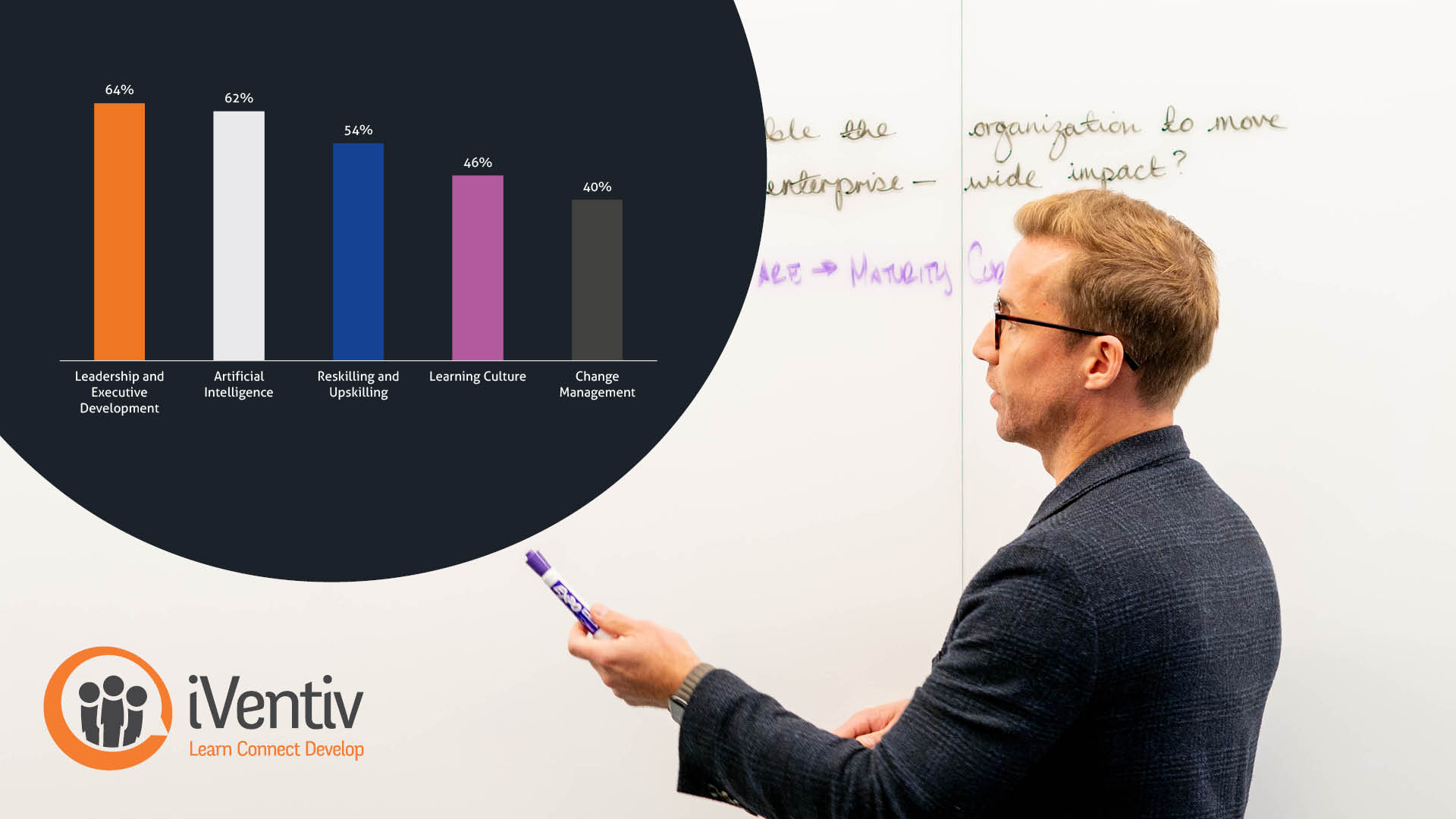
• Leadership and Executive Development: 64% (+3 percentage points since January)
• Artificial Intelligence: 62% (+2)
• Reskilling and Upskilling: 54% (-1)
• Learning Culture: 46% (-2)
• Change Management: 40% (no change)
Amidst the upheaval facing businesses everywhere, the focus for L&D remains largely the same. The signs are that focus areas are stabilising, with all the top five within the margin of error for a sample of this size.
Leadership and Executive Development is More Than Bread-and-Butter
Selected by 64% of respondents so far, Leadership and Executive Development has consistently been an area of focus for the Global Heads of Learning and Talent who attend iVentiv events. Since we first started collecting this data, it has been the single most-selected topic.
The consistency reflects, at least in part, the ongoing importance of the bread-and-butter Leadership Development programmes that are such a key part of the standard Learning and Talent offering.
Nonetheless, there are clearly new pressures on leaders that mean the nature of Leadership Development is still changing, and with it the role of Learning and Talent. Respondents refer to efforts to “reimagine our leadership development” and help “leaders adopt [change] with greater ease.” Leaders, they say, are operating in a “BANI world” and have to adapt to a range of changes, from global instability to “enabling AI” and evolving to a “cybernetic environment” with “mixed teams of human and AI agents.”
AI is Now an Embedded Focus for Learning and Talent Leaders
AI’s stratospheric rise up the top of our rankings is showing signs of stabilising. While AI wasn’t even a standalone category in 2024, between 2025 and 2026 it rose 19 percentage points to be a priority for 60% of respondents. Today, that number sits at 62%.
AI, this suggests, is embedding itself as a key area where Learning and Talent leaders are expected to deliver. From transforming the function to incorporate the advantages of AI, to supporting the entire organisation as it pivots to AI-first ways of working, these are no small challenges.
Chief Learning and Talent Officers are up for the challenge. Survey respondents say they are using AI in L&D for “pilots and ROI measurement”, to “create learning simulations”, or to “map skills”. Others are working on how “AI will change job and capability requirements”, and creating “an AI-first workforce by moving beyond experimentation to responsible AI integration while maintaining data security and accuracy.”
With AI established as a focus for a healthy majority of L&D and Talent pros, it will be intriguing to see whether AI becomes less of an immediate priority and more a part of the mundane day-to-day.
Skills-Based Approaches are Popular but Uncertain
The trend for skills-based organisations is undoubtedly still on the minds of many Learning and Talent leaders. Several refer to making the “transition to a skills-based organisation” and to a “skill-based L&D strategy” and “work to map skills across the organisation.”
The skills-based approach, which we have analysed in more detail in a separate skills report, can include anything from talent acquisition based on skills to workforce planning and designing work using skills analyses. It offers great promise and interest, but also uncertainty. When one Head of Talent in the UK asks how to “truly realise the benefits of skills-based organisations”, they represent a notable proportion who are still searching for the promised impact.
The proportion prioritising skills overall is down, but not to a statistically significant level. That interest is consistent with the shortening half-life of skills and the rapid reskilling that Learning leaders say is needed across the global workforce. AI and its wider impact is part of the mix here again, with respondents keen to build “AI literacy” alongside “human-centric skills”.
Learning Cultures Rely on Leadership and Shared Ownership
At 46%, the share of Learning and Talent leaders prioritising Learning Culture is also holding at a relatively steady level. While one of the least tangible topics on the list of options, Learning Culture has consistently been one of the most selected in recent years.
What do Learning and Talent executives mean when they talk about a learning culture? One Global Head of Learning at a European technology firm was working towards a learning culture where “managers and individual contributors own their professional development, and where the executive team act as true advocates of Learning & Development.” Another, based in Germany, sought a learning culture where there is “communication and connection with our employees.”
If there is a common denominator, it would be the desire for a business culture in which learning is encouraged, prioritised, and understood as something that happens predominantly outside the confines of formal training.
Change Management is a Key Skill for Learning and Talent
There is no shortage of change to choose from in today’s business environment. We have already covered the impact of a BANI world on leaders, not to mention AI and the need for rapid upskilling, and the priorities selected by Global Heads of L&D and Talent show that managing that change as a function remains a significant priority in itself.
What is the role of Learning and Talent? Often, it means working with leaders to achieve a “mindset change”. In other cases, it means redesigning work altogether. As one Talent leader in Switzerland put it, they are prioritising “org design and change management opportunities as work will get redefined around the use of AI”.
Looking Ahead: Learning and Talent in 2027
The priorities selected by Heads of Learning and Talent so far in 2026 suggest a degree of stability in the areas of focus for senior leaders, even if the environment itself remains unstable.
A function like Learning rarely changes suddenly, and it is unlikely that these priorities will shift markedly in the short term. Even the rise of AI to the top of the rankings took two years to fully materialise. That said, spotting trends that emerge slowly can require even closer attention. The Learning and Talent leaders who stay on the pulse, adjusting their approach and experimenting constantly with new ideas, will be those who succeed.
Frequently Asked Questions
1. What Are the Top Learning and Talent Priorities in 2026?
The five leading priorities identified by attendees at iVentiv events in 2026 are Leadership and Executive Development, Artificial Intelligence, Reskilling and Upskilling, Learning Culture, and Change Management. These priorities have remained broadly consistent since the beginning of the year, suggesting that senior Learning and Talent leaders are maintaining a stable focus despite continued disruption across the global business environment.
2. Why Is Leadership and Executive Development the Top L&D Priority in 2026?
Leadership and Executive Development remains the leading priority, selected by 64% of respondents. The findings reflect both the continued importance of established leadership programmes and the growing pressure on leaders to respond to global instability, organisational transformation, AI adoption, and increasingly complex working environments.
3. How Important Is Artificial Intelligence to Learning and Talent Leaders in 2026?
Artificial Intelligence is now a priority for 62% of respondents, making it the second most-selected topic. Learning and Talent teams are using AI to create simulations, map workforce skills, measure learning impact, and improve programme delivery. They are also helping their wider organisations build AI literacy and prepare for changing job and capability requirements.
4. Why Do Reskilling and Upskilling Remain Major Learning Priorities?
Reskilling and upskilling remain important because organisations continue to face changing roles, technologies, and workforce requirements. Many Learning and Talent leaders are working towards skills-based operating models, using skills data to inform talent acquisition, workforce planning, internal mobility, and work design. However, the findings also suggest that many organisations are still trying to demonstrate the practical value of these approaches.
5. Why Does Learning Culture Remain a Priority for Global L&D Leaders?
Learning Culture continues to rank among the most-selected priorities, with 46% of respondents identifying it as a current focus. The responses suggest that leaders associate a strong learning culture with shared ownership of development, visible executive support, stronger communication, and recognition that learning happens through everyday work as well as formal programmes.
6. Why Is Change Management a Key Priority for Learning and Talent Functions?
Change Management was selected by 40% of respondents. The findings show that Learning and Talent teams are supporting organisations through mindset shifts, new ways of working, organisational redesign, AI adoption, and rapid skills change. This places the function at the centre of helping leaders and employees respond to ongoing transformation.
7. Are Learning and Talent Priorities Likely to Change in 2027?
The findings suggest that the main priorities are unlikely to change dramatically in the short term. Leadership development, AI, skills, learning culture, and change management are all linked to long-term organisational challenges. However, their relative importance may continue to shift as AI becomes more embedded, skills-based models develop, and new workforce pressures emerge.