Submitted by Richard.Parfitt on
Updated June 2026
By Richard Parfitt (Marketing Director, iVentiv and author of the Skills, Skills-Based Organisations, and L&D Report)
For several years, Learning and Talent leaders have talked about skills-based organisations, skills marketplaces, skills taxonomies, reskilling strategies, upskilling at work, and the shortening half-life of skills. The question is whether all that language reflects a passing trend or a deeper shift in the way organisations and employees learn.
iVentiv’s latest report, Skills, Skills-Based Organisations, and L&D, suggests that ‘skills’ and their associated buzzwords have become often career-defining priorities for senior Learning and Talent leaders.
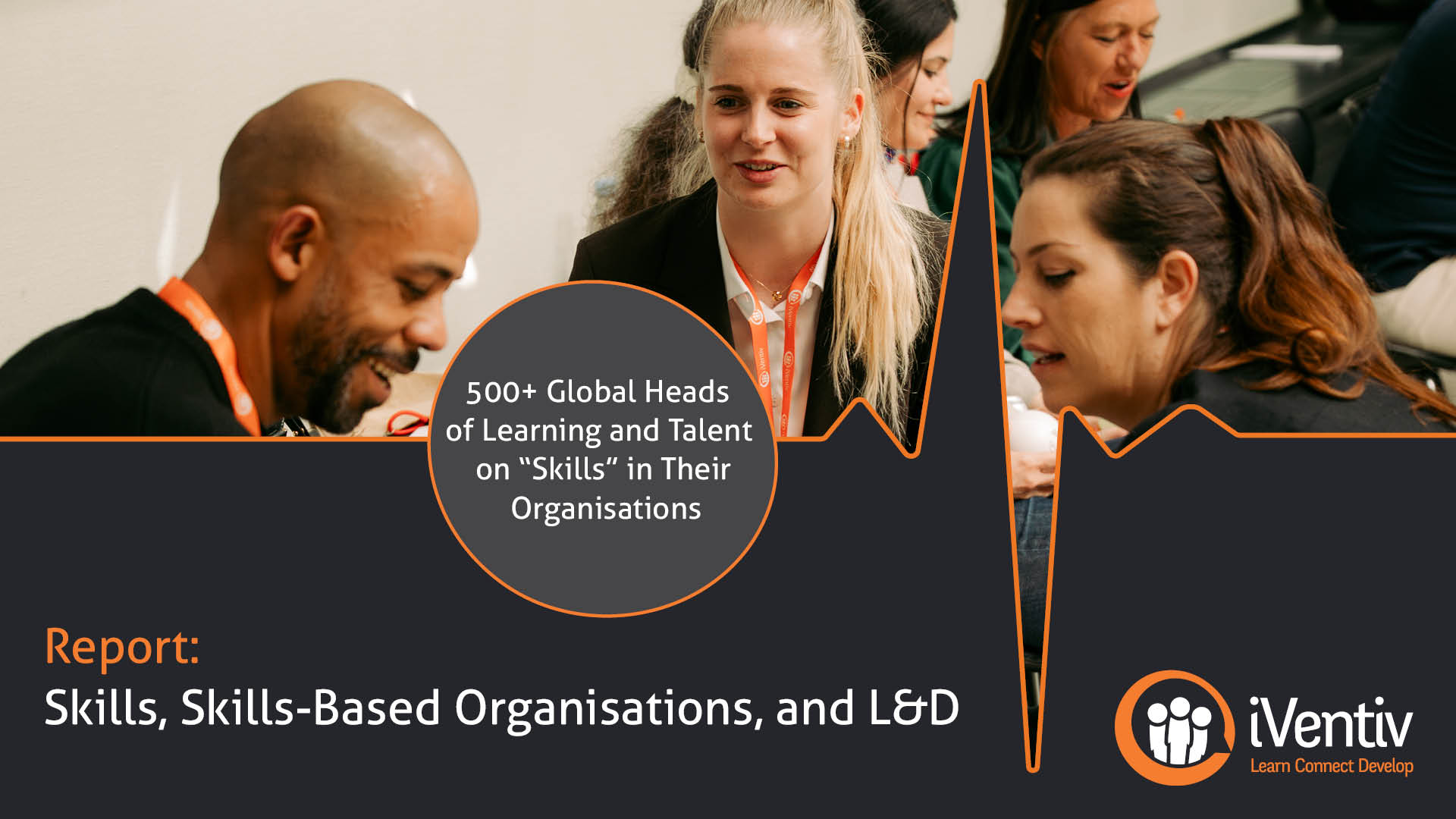
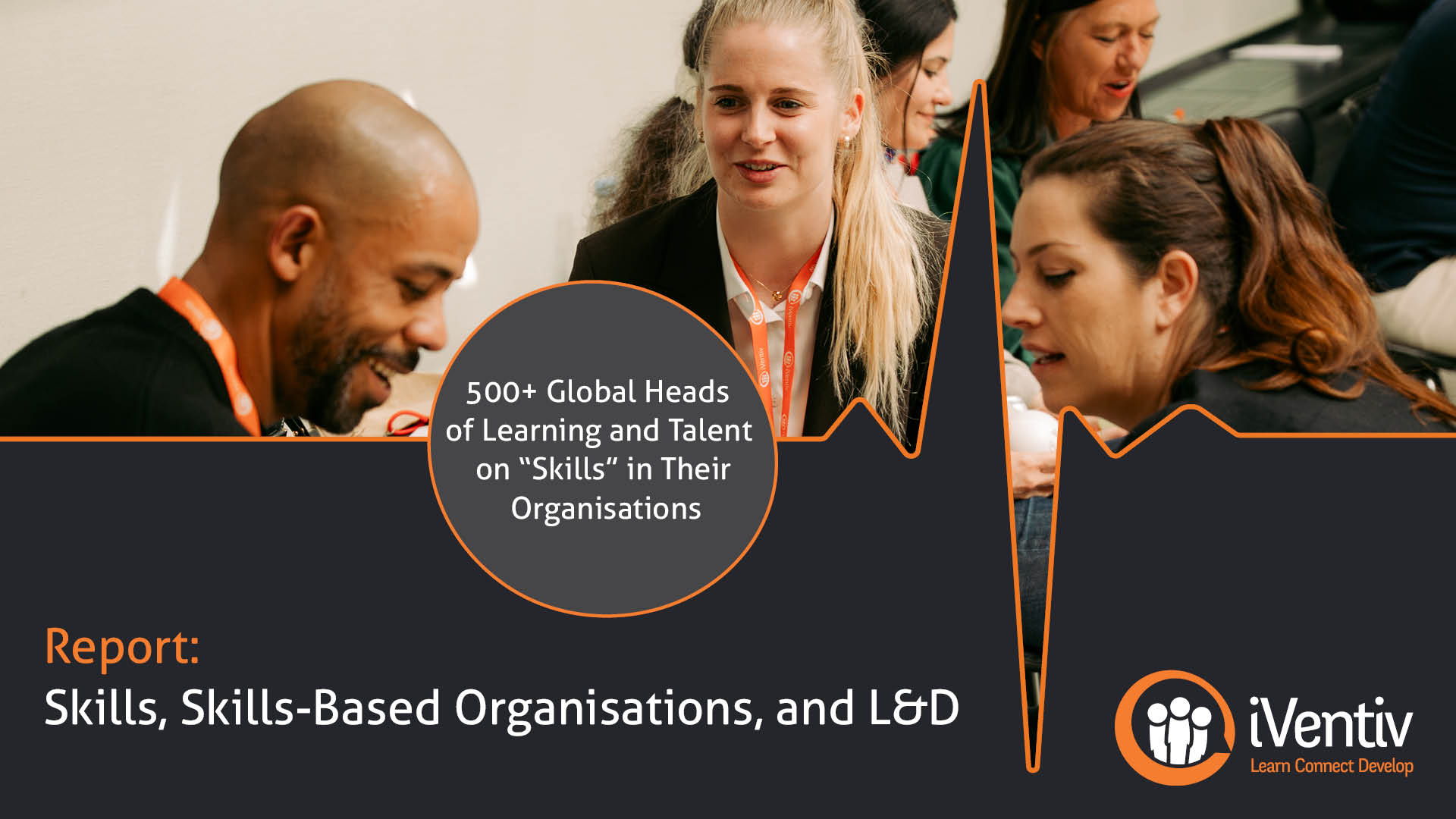
Based on survey responses from more than 500 Heads of Learning, Talent Management, and Executive Development, the report explores how organisations are approaching upskilling and reskilling the workforce, why AI is accelerating the skills agenda, and where skills-based organisations are beginning to succeed.
Download the full report today for the data, case studies, and executive perspectives behind the findings.
Key Takeaways
- 55% of Learning and Talent leaders now say Reskilling and Upskilling is a top priority, compared with around 25% in late 2021
- Reskilling and Upskilling is the third-most cited priority out of 51 tracked categories, behind only Leadership and Executive Development and AI
- Leaders with larger budgets are more likely to prioritise skills, with more than 70% of those managing budgets above $50 million citing Reskilling and Upskilling as a priority
- US-based Learning and Talent leaders are more likely to focus on skills than peers in Europe, the UK, and the Middle East
- AI is a major driver of the skills push, both because it changes the skills employees need and because it changes how organisations map, assess, and develop those skills
Reskilling and Upskilling Has Become a Top-Three Priority
The most striking finding in the report is the speed at which Reskilling and Upskilling have risen on the Learning and Talent agenda.
In the final months of 2021, only around 25% of L&D and Talent leaders surveyed by iVentiv said Reskilling and Upskilling was a top priority for their function. Over the past 12 months, that figure has risen to 55%.
That makes Reskilling and Upskilling the third-most cited priority among Learning and Talent executives out of the 51 categories iVentiv tracks. It now appears ahead of Learning Culture, Change Management, the Future of Work, Employee Wellbeing, and several other long-standing L&D priorities.
Skills Are a Bigger Priority for Bigger Budgets
Another notable finding in the report is that budget matters. Overall, 55% of respondents say Reskilling and Upskilling is a top priority. Among executives managing budgets of more than $50 million, that rises to more than 70%.
That matters because enterprise skills work often requires significant investment, from skills mapping to widespread upskilling initiatives. In practical terms, business upskilling is moving beyond programme delivery. For larger enterprises, it increasingly involves connecting skills data to workforce planning, internal mobility, job architecture, business transformation, and AI adoption.
US Leaders Are More Likely to Prioritise Skills
The report also shows a regional difference. Senior Learning and Talent leaders in the United States are the most likely to cite Reskilling and Upskilling as a top priority, at 61%.
The report suggests this may be connected to sector mix and the technological environment in different regions. A focus on AI correlates with a focus on skills.
That connection is important. In many organisations, the rise of AI is creating urgent questions about what skills employees need, which roles will change, and how quickly Learning and Talent functions can respond.
AI Is Driving the Skills Agenda
Learning and Talent leaders who prioritise Reskilling and Upskilling are also much more likely to name Artificial Intelligence and the Future of Work as top priorities.
Among all respondents, 64% cite AI as a priority. Among those focused on skills, that rises to 73%. For the Future of Work, the equivalent figures are 36% overall and 45% among those focused on skills.
The report identifies two ways AI is driving the skills push.
First, AI is changing the skills employees need. Second, AI is changing how Learning and Talent teams approach skills themselves. Respondents describe work around competence frameworks, skill mapping, gap analysis, personalised growth plans, and AI-enabled coaching. The hope is that skills gaps can be identified and addressed more quickly, with more targeted support and better use of existing talent.
That is why reskilling and upskilling for a digital workplace cannot be treated as a generic training challenge. It is a strategic question about how work is changing and how fast organisations can adapt.
What Skills-Based Organisations Are Trying to Do
The report also explores the rise of skills-based organisations. Skills-based organisations often use skills taxonomies, skill mapping, skills libraries, and skills marketplaces. They may use AI to assess and index employee skills. They often design work, hiring, workforce planning, and development around skills rather than fixed job roles. They also use skills data to identify gaps, reveal untapped strengths, and create more personalised development plans.
In other words, a skills-based organisation is not simply one that offers more learning content. It is one that uses skills as a practical language for making decisions about people, work, performance, and growth.
Upskilling and Reskilling Examples from the Report
The report includes several examples of organisations applying skills-based approaches in practice.
At Comcast, Chief Learning Officer Sara Dionne has led a move from traditional competency frameworks towards a data-driven, skills-based approach to talent development. The initiative, branded “Skill Forward”, is shaped by business priorities. In year one, 1,100 leaders contributed to identifying the skills the business needed. Today, more than 3,000 leaders contribute, alongside hiring data, external research, and corporate strategy.
At Boehringer Ingelheim, Martin Hess describes how the organisation introduced a skills-based approach at enterprise scale. Employees were prompted to build skills profiles, with AI surfacing an initial skills map. Crucially, the work was then connected to strategy, with business leaders identifying the capabilities required over the next 12-24 months. That allowed skills data to support gap analysis, target proficiency levels, and clearer development pathways.
At Zurich Insurance, Adrian Stäubli describes a skills-based organisation as one that prioritises the identification, development, and use of skills to drive business outcomes. Zurich’s approach combined a skills taxonomy with career development tools, skills tracking, and change management, helping business units adopt the approach in a more targeted way.
The Risk: Skills Projects Becoming White Elephants
For many Learning and Talent leaders, the risk is that complex skills taxonomies, platforms, and frameworks become expensive white elephants. They may look impressive, but without leadership energy, business unit engagement, and clear organisational problems to solve, they can fail to change how work actually gets done.
Based on current evidence, the success of skills-based approaches will be judged by organisational performance. In many cases, that may depend less on the technology itself and more on the CLO’s ability to navigate the organisation, align stakeholders, and make skills relevant to real business decisions.
Download the iVentiv Skills Report
The full iVentiv report, Skills, Skills-Based Organisations, and L&D, explores the rise of upskilling and reskilling in more depth, drawing on responses from more than 500 Global Heads of Learning, Talent Management, and Executive Development.
Download the report today to explore the data behind the skills trend, the impact of AI, the regional and budget differences shaping skills investment, and case studies from Comcast, Boehringer Ingelheim, and Zurich Insurance.
Frequently Asked Questions
What is upskilling and reskilling?
Upskilling and reskilling are approaches to workforce development. Upskilling helps employees develop stronger or more advanced skills for their current role or career path. Reskilling helps employees build new skills so they can move into different roles or respond to changing business needs.
What is the difference between reskilling and upskilling?
The difference between reskilling and upskilling is the direction of development. Upskilling builds on an employee’s existing role, while reskilling prepares them for a new or significantly changed role.
Why is upskilling in the workplace important?
Upskilling in the workplace helps organisations respond to change, improve performance, retain talent, and develop capability internally. The iVentiv report shows that Reskilling and Upskilling is now a top-three priority for Learning and Talent leaders, cited by 55% of respondents.
What is an example of reskilling in business?
An example of reskilling in business would be helping employees move from roles affected by automation into growing areas such as digital operations, customer success, data analysis, AI-supported workflows, or new technical roles.
What are effective reskilling strategies?
Effective reskilling strategies start with business priorities. Organisations need to identify future capability needs, map existing skills, understand gaps, create targeted development pathways, and connect reskilling to internal mobility and workforce planning.
What role does leadership play in enterprise reskilling?
Leadership plays a critical role in enterprise reskilling. The report suggests that successful skills-based work depends on leadership support, business unit engagement, and the ability to connect skills initiatives to measurable business outcomes.
What are skills-based organisations?
Skills-based organisations place skills, rather than fixed jobs, at the centre of decisions about work, hiring, development, and workforce planning. They often use skills taxonomies, skills mapping, skills libraries, and AI-enabled tools to understand and develop capability.
Why is AI important for reskilling and upskilling?
AI is important because it changes the skills employees need and the way organisations identify and develop those skills. The report shows that Learning and Talent leaders focused on skills are also more likely to prioritise AI and the Future of Work.
What are examples of upskilling and reskilling from the report?
The report highlights Comcast’s “Skill Forward” initiative, Boehringer Ingelheim’s enterprise skills profiles and gap analysis, and Zurich Insurance’s skills-based approach combining taxonomy, career tools, skills tracking, and change management.
How can organisations avoid failed skills initiatives?
Organisations can avoid failed skills initiatives by connecting skills work to business priorities, securing leadership support, involving business units, and measuring impact through organisational performance rather than platform adoption alone.