Submitted by Kerry Summers on
Updated March 2026
By Kerry Summers (Content Marketing Coordinator, iVentiv)
Key Takeaways
- Design learning for speed, not perfection
- Shift the goal from compliance to confidence
- Use technology to remove friction, not humanity
- Build leaders who can stabilise pressure, not just manage tasks
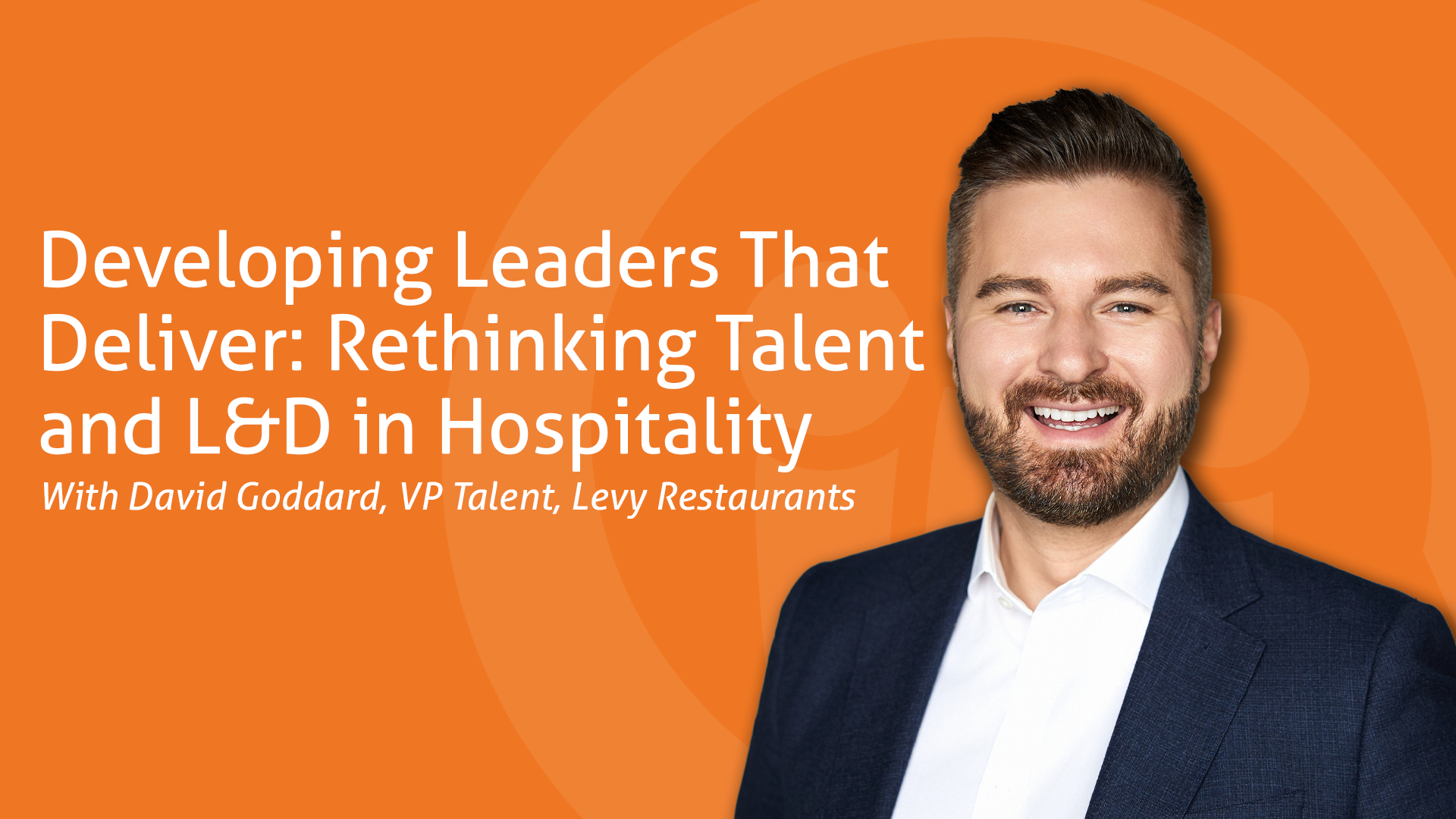
In a fast-paced hospitality environment, where thousands of employees may be onboarded in a matter of hours and guest expectations continue to rise, many take the view that traditional approaches to Learning and Leadership Development simply don’t cut it. According to David Goddard, Vice President of Talent at Levy Restaurants, the future of hospitality leadership depends on rethinking how we approach Talent, Learning, and communication, and blending them together in far more intentional ways.
Levy Restaurants, best known for delivering premium food and beverage experiences across sports, entertainment, and major venues worldwide, operates in one of the most operationally intense corners of the hospitality industry. From global sporting events to iconic racecourses, the scale and speed of Levy’s workforce creates unique challenges and opportunities for Leadership Development.
Learning at the Speed of Hospitality
“In some industries, you have months to onboard someone,” David explains. “In sports and entertainment, you might have a few hours.”
- David Goddard, VP Talent, Levy Restaurants
That reality, he says, fundamentally reshapes how Learning & Development must operate. Compliance, safety, and technical skills are non-negotiable, but so is confidence; whether someone is pulling a pint, handling allergens, or serving high-volume crowds, they must be competent almost immediately.
The answer, according to David, isn’t more technology for technology’s sake:
“There is no substitute for people getting on the ground, doing it, practicing it, and learning through muscle memory.”
- David Goddard, VP Talent, Levy Restaurants
While tools like VR or tablets can play a role, experiential, hands-on learning remains critical in fast-paced hospitality settings.
Crucially, Levy doesn’t centralise all training delivery. Instead, David’s team designs learning experiences, creates content, and trains the trainers while local leaders execute. Embedding L&D capability at every level is something that he says ensures consistency without sacrificing speed or relevance.
Making Learning Stick: Confidence Over Compliance
One of the most persistent challenges in hospitality learning is ensuring that training changes behaviour, rather than acting as a tick-box exercise.
For David, inspiration matters just as much as information.
At Levy, onboarding and operational training are deliberately engaging, social, and often gamified. From races on point-of-sale systems to hands-on guest service simulations, learning is designed to be memorable and confidence-building. Facilitators are chosen for their ability to inspire as much as for their subject matter expertise.
“When we do this right, the lines are shorter, the guests are happier, and team members want to come back,”
- David Goddard, VP Talent, Levy Restaurants
According to David, retention, guest satisfaction, and performance all improve when people feel capable and proud of their skills.
Creating Legends: Scalable Hospitality Onboarding and Compliance Training
One programme that David is particularly proud of is Levy’s long-standing onboarding experience, Creating Legends. First launched in the 1990s, the programme has evolved into a blended, video-enabled experience that puts purpose front and centre. David explains that:
“It’s not just about pulling a pint… It’s about creating an experience.”
- David Goddard, VP Talent, Levy Restaurants
Today, more than 150,000 team members go through Creating Legends annually in the U.S. alone. Despite covering essential topics like food safety and allergen prevention, the programme is intentionally designed to be engaging and enjoyable, proving that scale doesn’t have to come at the cost of quality.
Top Leadership Competencies in Hospitality: Learning Agility, Assertiveness, and Emotional Intelligence
When it comes to leadership capability, David is clear that technical skills alone are not enough. Levy’s research, which draws on engagement data, psychometrics, and frontline feedback, highlights several traits that consistently differentiate great leaders:
- Learning agility: In an industry shaped by shifting food trends, automation, and AI, leaders must continuously adapt.
- Assertiveness, not as bossiness, but as clarity: “assertive leaders set clear expectations and hold people accountable… people want to know what good looks like.”
- Emotional management: leaders who can stay calm, create psychological safety, and manage how others feel become anchors in high-pressure environments where one weak link can derail an entire operation.
“How leaders treat people,” David says, “is reflected in how team members treat guests.”
- David Goddard, VP Talent, Levy Restaurants
Why Learning and Internal Communications Should Be One Function
Perhaps David’s most provocative stance is his belief that traditional digital learning models are broken.
“Our approach to static, SCORM-based compliance learning is terrible,” he says candidly. “It’s designed to tick a box, not to change behaviour.”
- David Goddard, VP Talent, Levy Restaurants
More radically, he questions why Learning and Communication exist as separate functions at all. In a world of constant change, most communication asks people to do something differently, which inherently involves Learning.
“With things moving so quickly,” David argues, “communication and learning can be blended together. I don’t even know that they should be separate departments.”
- David Goddard, VP Talent, Levy Restaurants
By merging learning platforms and internal communications, organisations have an opportunity to create a more agile, responsive, and learner-centric culture, one that focuses not just on delivering content, but on creating learners.
Technology, AI, and the Human Difference
Looking ahead, David says that he’s most excited by the convergence of technology and hospitality but only when it enhances, rather than replaces, human connection.
From frictionless markets that reduce queue times to AI-enabled learning platforms that deliver just-in-time support, Levy is exploring how technology can remove friction from the flow of work. Early results are promising, including a 12% improvement in engagement scores related to access to training.
Still, David is clear about what truly differentiates hospitality brands:
“You can get an efficient process from AI,” he says. “But a genuine human interaction can change the flow of someone’s entire day.”
- David Goddard, VP Talent, Levy Restaurants
The future, he believes, lies in giving guests choice, whether they want fast, self-service efficiency or meaningful human connection, and preparing teams to deliver both with confidence.
Ultimately, David believes the goal isn’t more courses or certifications, it’s curiosity.
In hospitality, where trends shift quickly and experiences are increasingly shared in real time, it is clear that empowering people to continuously develop their skills and share their expertise with others may be the most sustainable competitive advantage of all.
David Goddard is a strategic talent executive with a proven track record of enhancing performance, profitability, and employee engagement. As the Vice President of Talent at Levy, David has modernised the Training, Talent Acquisition, and People Analytics teams, improving internal mobility and employee retention. Join David for more insights in Chicago, 9-10 June 2026.
FAQ
What makes leadership development in hospitality different from other industries?
Hospitality operates at a unique pace, often onboarding large volumes of frontline employees in hours rather than months. This means leadership development must prioritise speed, confidence, and real-world readiness. Unlike traditional industries, hospitality leaders must stabilise pressure, adapt quickly, and deliver consistent guest experiences in high-intensity environments.
Why is traditional onboarding ineffective in modern hospitality environments?
Traditional onboarding and static compliance training are often too slow, generic, and disconnected from real work. In fast-paced hospitality settings, learning must be hands-on, engaging, and immediately applicable. Programmes that focus solely on ticking compliance boxes rarely build the confidence or competence needed on the floor.
How can hospitality organisations train employees at scale without sacrificing quality?
Successful hospitality brands design learning centrally but deliver it locally. By creating strong learning frameworks, training facilitators effectively, and empowering local leaders to execute, organisations can achieve consistency while keeping training relevant, fast, and human, even at scale.
Why is confidence more important than compliance in hospitality training?
While compliance is essential, confidence is what drives performance. Employees who feel capable are more engaged, deliver better guest experiences, and are more likely to return. Confidence-focused learning leads to shorter queues, happier guests, and stronger retention, turning training into a business advantage rather than a checkbox exercise.
What is experiential learning and why does it matter in hospitality?
Experiential learning focuses on learning by doing, practicing skills on the job, building muscle memory, and learning through real interactions. In hospitality, where speed and precision matter, hands-on learning is often more effective than digital-only courses or passive content consumption.
What leadership competencies are most important in hospitality today?
Research highlights three critical leadership traits in hospitality: learning agility, assertiveness with clarity, and emotional intelligence. Leaders who adapt quickly, set clear expectations, and manage emotions effectively create psychological safety and deliver stronger team and guest outcomes.
What is “Creating Legends” and why is it effective?
Creating Legends is a long-standing hospitality onboarding programme developed by Levy Restaurants that blends purpose-led storytelling with engaging, video-enabled learning. It demonstrates that even large-scale onboarding can be memorable, meaningful, and effective when designed around experience rather than information overload.
Why should learning and internal communications be combined?
In fast-changing hospitality environments, most communication requires people to do something differently, which is learning by definition. Blending learning and internal communications creates more agile, responsive systems that focus on behaviour change rather than content delivery alone.
How can technology and AI support hospitality learning without losing the human touch?
Technology works best when it removes friction, not humanity. AI-powered learning platforms, just-in-time support, and frictionless service tools can improve efficiency and access to training, but genuine human interaction remains the differentiator that defines great hospitality experiences.