Submitted by Kerry Summers on
Updated March 2026
By Kerry Summers (Content Marketing Coordinator, iVentiv)
Key Takeaways
- Skills-based organisations are becoming a strategic necessity
- Skills strategies unlock retention, mobility, and employee ownership
- Data and analytics are the backbone of effective skills strategies
- Culture and change management drive adoption
- Executive sponsorship and ecosystem thinking are critical to success
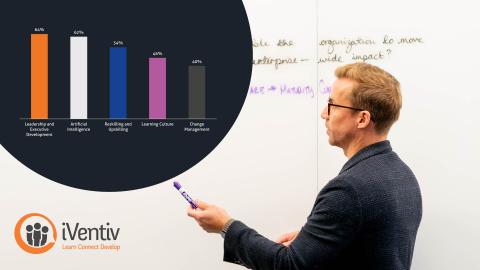
For more than 50% of the iVentiv community, ‘Reskilling and Upskilling’ is a topic that remains top-of mind as we push ahead into 2025 – an increase of almost ten percentage points from a year ago according to the iVentiv Pulse, which tracks the priorities of Global Heads of Learning and Talent.
What questions have your peers been asking?
- ‘How do we establish a skills-based framework?’
- ‘How do we successfully upskill an organisation with skills for today and tomorrow?’
- ‘How do we upskill and reskill our workforce to become future-ready?’
This blog dives into the topic of skills-based organisations (SBOs), pulling from the insights of some of the most influential voices in Learning, Talent, and Executive Development including:
- Vidya Krishnan (CLO, Ericsson)
- Nigel Paine (Co-Presenter, Learning Now TV & Former Head of People Development, BBC)
- Klaus Scheile (VP, Learning & Development, T Systems International)
- Peter Sheppard (Head of Global L&D Ecosystem, Ericsson)
- Jo O’Driscoll Kearney (Global Head of Learning & Leadership Development, Majid Al Futtaim)
- Jay Moore (former CLO, GE)
- Daniela Prinz (Global Head of Learning & Competency Development, ZF Group)
- Simon Gibson (Head of Talent, Center Parcs)
- Adrian Staubli (Group Head of Skills Development Solutions, Zurich Insurance Group)
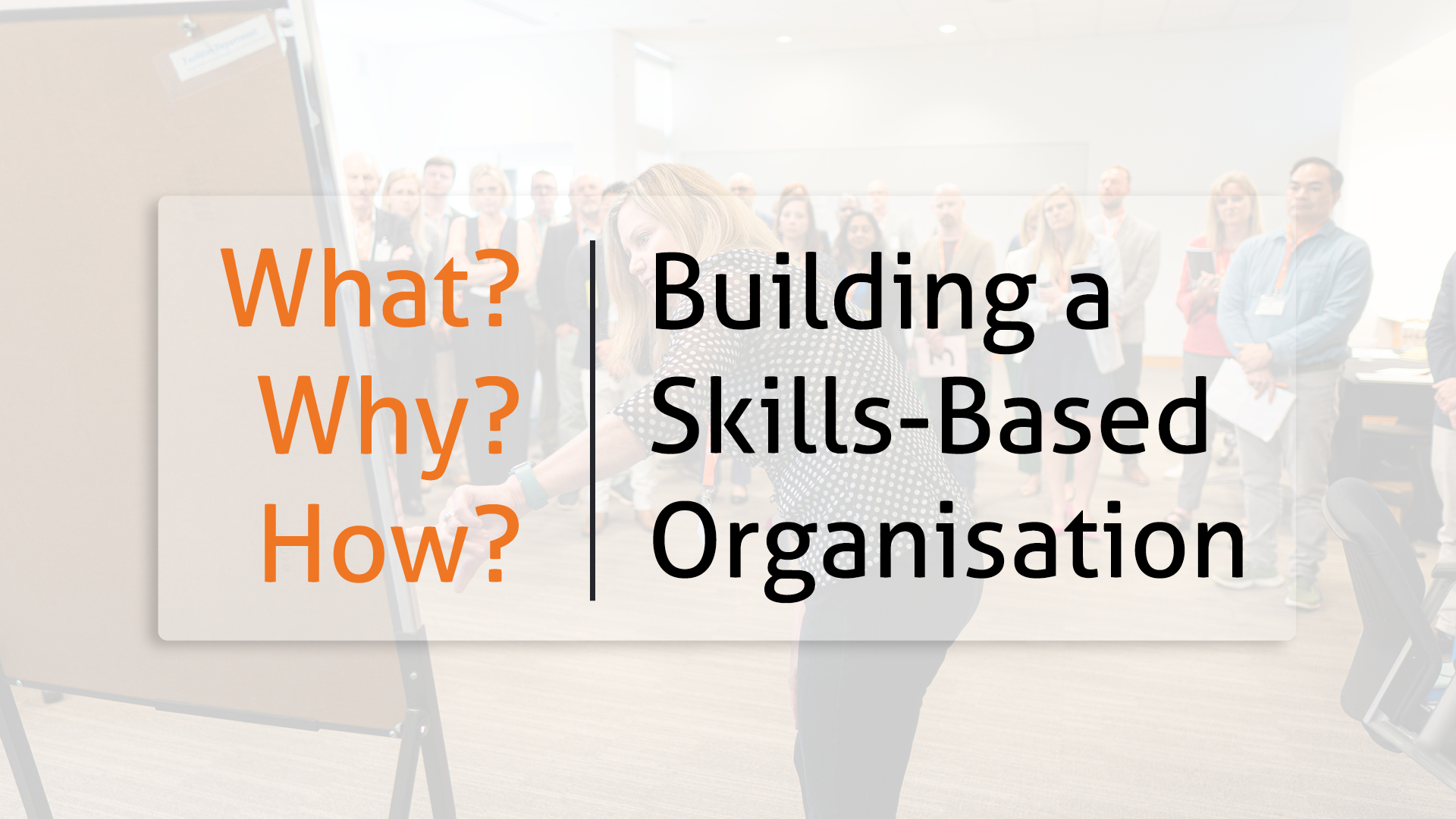
What are the key components of a skills-based organisation? Why should you invest in a skills-based approach? How do you get started? Read on to see what your peers have to say.
Why do CLOs Invest in a Skills-Based Approach?
Drive long-term success
One thing that’s clear is that Heads of Learning and Talent aren’t looking at a skills-based approach as a short-term commitment. Instead, they see it as an active investment in employees, and a necessary evolution for organisational longevity.
For Adrian Staubli, Group Head of Skills Development Solutions, Zurich Insurance Group, a skills-based organisation offers a strategic way forward for businesses seeking to navigate today’s complex environment. It is, he says, “the secret ingredient we add into the mix in order to further drive our business." With the right foundation, stakeholder engagement, and cultural alignment, organisations can create a sustainable, scalable skills model that empowers employees and drives long-term success. At Zurich, that means empowering employees to become “the CEO of their careers.”
Daniela Prinz, Global Head of Learning & Competency Development, ZF Group, defines a skills-based organisation as one that “values the individual based on their unique skills […] and then driving those skills and competencies to the next level.” This is a focus that, she says, facilitates the development of employees' competencies and potential beyond conventional limits.
Boost retention
For organisations looking to grow and stay ahead of the competition, advocates of SBOs say that investing in a skills-based approach also aids retention efforts. According to Peter Sheppard, Head of Global L&D Ecosystem at Ericsson, reskilling employees makes them feel like a valued part of the organisation, and encourages growth through improved internal mobility, something that “helps people to see the development and growth they can move through in their current role”.
Vidya Krishnan, CLO at Ericsson, agrees, saying that skills-based organisations “look at people as more than just their CV” and value skills over traditional factors like education or years of experience.
Peter goes on to say that skills-based organisations also “allow people to grow through improved internal mobility”; by focussing not just on the skills you need but on adjacent skills, employees can transfer into different roles and save you money on hiring.
Boost agility and innovation
The L&D teams that invest in a skills-based approach are doing it because they believe their organisations have to increase their capacity for innovation and remain agile. According to Vidya Krishnan, the idea of building ‘skills’ aligns with the natural human tendency to “learn, unlearn, and relearn”. Skills-based organisations, she goes on, “foster a culture of continuous development”, enabling organisations to “remain agile and responsive to new challenges.”
By taking an holistic view of skills development and “making the ability to move between teams and roles looser”, as Nigel Paine, Co-Presenter, Learning Now TV & Former Head of People Development, BBC, puts it, skills necessitate a fundamental transformation of the organisation, driving the necessary evolution towards a more adaptive, innovative, and human-centric workplace.
For Adrian Staubli, skills-based approaches empower employees to take ownership of their career development. By clearly defining skills and aligning them with roles, he says, Zurich enables its employees to “understand what upskilling and reskilling mean in practical terms”, encouraging continuous personal and professional growth.
Key Components of a Skills-Based Organisation
What does a skills-based organisation look like?
Based on his experiences at Zurich Insurance, Adrian Staubli sees two key components that go into creating a robust skills-based organisation:
1. Data Analytics for Skill Tracking
Data analytics play a crucial role in Zurich's skills-based strategy, enabling Adrian's team to track skill development trajectories, identify gaps, and understand workforce capabilities. This data-driven insight helps Zurich make informed decisions about talent development, succession planning, and strategic workforce investments.
2. Comprehensive Change Management
In Adrian’s view, a successful skills-based approach “goes beyond tools and frameworks”; it requires significant cultural change. Adrian explains that Zurich put substantial effort into helping employees understand how these tools contribute to their personal and career growth. By rolling out the program gradually and engaging various business units individually, Zurich achieved higher adoption rates and fostered widespread organisational buy-in.
Daniela Prinz, meanwhile, says that ZF Group’s Skills Hub has been instrumental in their transformation. The Skills Hub is a change management tool designed to help employees adapt to major industry megatrends such as e-mobility, digitalisation, and sustainability. It is a tool that, she says, has transformed the company from a “traditional combustion engine” to a high-tech firm.
The reason Daniela considers this to be a key component for ZF Group is that it isn’t just a learning tool; it’s a change management catalyst designed to enhance the skills and competencies necessary for transformation.
Simon Gibson, Head of Talent, Center Parcs, says that, with increasing difficulties in finding the right talent, coupled with economic challenges and technological disruptions, it's essential to create a skilled workforce.
For him, crucial aspects include:
- Adaptability
- Specialised Skills
- Innovation and Creativity
- Customer-Centric Approaches
- Commercial Acumen
For Simon, building a skilled workforce is not just about hiring the right people. It's about developing the existing workforce to be adaptable, innovative, customer-centric, and commercially savvy.
How can you get your SBO started?
A reoccurring theme for many experts in the fields of Talent, L&D, and Leadership when it comes to the ‘how’ of building a skills-based organisation, is, unsurprisingly, leadership buy-in.
Engaging senior leadership, says Klaus Scheile, VP, Learning & Development, T Systems International, is crucial. He advises that leaders should start with a strategic workshop involving the board of management. The purpose of said workshop is to set a clear direction and goals for where the organisation wants to be in three years. This engagement, he says, will not only provide a strong foundation and direction but will also empower the team with the necessary support and authority to execute their plans effectively.
Adrian Staubli also says that getting buy-in from senior leadership is vital for getting started on your skills journey.
His key advice?
-
Find a Senior Ally in the Business
This leader can advocate for the skills-based approach at executive meetings, ensuring alignment with organisational priorities.
-
Focus on Stakeholder Engagement
Skills-based transformation requires support from all levels of the organisation. Effective stakeholder management ensures that leaders, managers, and employees are aligned with the vision and committed to its success.
-
Promote a Learning Culture
Without a commitment to continuous learning, even the most advanced skills-based models will struggle to gain traction. At Zurich, promoting learning is seen as a continuous journey, emphasising that a skills-based approach is an ongoing commitment, not a one-time initiative.
For Jo O’Driscoll Kearney, Global Head of Learning & Leadership Development, Majid Al Futtaim, and Jay Moore, former CLO, GE, “creating an ecosystem that constantly requalifies employees in line with rapid change” is vital.
How can you do it?
Jo and Jay say that making skill development a strategic priority at the board level is essential. Jo argues that, when it comes to skills development, “it’s no longer the charge of the Learning department, or a nice to have. If it’s not a strategic board-level imperative to retain competitive advantage, you’re probably missing something.”
They go on to say that integrating learning science with rapid skill-requalification programmes is key to creating a resilient and adaptive workforce.
But what about having the right tech?
For Peter Sheppard, Talent Marketplaces, skills taxonomies and tech are also crucial elements to help kick-start your skills journey. At Ericsson, he explains, “identifying the demand and supply” for skills is vital, but you can’t manage and implement an internal Talent Marketplace “until you can accurately manage the matching of skills to people.”
That means identifying, categorising, recording, and mapping the skills you already have. Peter recommends “understanding the skills that are relevant in your organisation and structuring those skills into some kind of meaningful hierarchy." With this ‘skills taxonomy’, Peter says, connecting skills to jobs becomes much simpler.
Adrian Staubli recommends investing in AI-enabled technologies that support learning and skills development because, he says, “advanced tools can provide personalised learning paths, helping employees track and expand their skillsets efficiently.”
He also talks about building an in-house Global Skills Library and a career development tool at Zurich, connecting to the organisation’s LMS to map learning content against skills already in the organisation. Making this visible to employees helps them to “understand, when everything comes together, [how] these tools are really helping them to drive their careers and their personal development in a more self-driven way.”
In short, Heads of Learning and Talent are prioritising skills-based approaches because they believe it can not only empower employees and boost retention, but also give your organisation a serious competitive advantage
Exact definitions and methods vary, but what's clear is that Learning teams aren't sitting back amidst the change. With skills-based approaches, their hope is that they can lead their organisations through it.
Are you just starting out on your skills journey? Take a look at the interviews and blogs below for more insights into this fascinating topic.
Related Resources
- Building a Skills-Based Organisation: Insights from Zurich Insurance Group with Adrian Staubli (Group Head of Skills Development Solutions, Zurich Insurance Group)
- Skills-Based Organisations: Hype or Hope? With Vidya Krishnan (CLO, Ericsson) and Nigel Paine (Co-Presenter, Learning Now TV & Former Head of People Development, BBC)
- 10,000 Future Skills: Lessons Learned From an Amazing Journey with Klaus Scheile (VP, Learning & Development, T Systems International)
- Five Minutes with Peter Sheppard (Head of Global L&D Ecosystem, Ericsson)
- Change Ecosystems, Rapid Reskilling, and Leaders of the Future with Jo O’Driscoll Kearney (Global Head of Learning & Leadership Development, Majid Al Futtaim) and Jay Moore (former CLO, GE)
- The Qualification Initiative Skills Hub and Transformation Megatrends at ZF Group with Daniela Prinz (Global Head of Learning & Competency Development, ZF Group)
- Building a Skilled Workforce: Embracing and Investing in a Skills-based Future with Simon Gibson (Head of Talent, Center Parcs)