Submitted by Richard.Parfitt on
Updated August 2026
By Richard Parfitt (Marketing Director, iVentiv and author of The State of Learning Culture 2026 Report)
Learning Culture is one of those ideas that can be easy to recognise and much harder to define.
For some Learning & Development leaders, it means employees actively seeking out opportunities to learn. For others, it means embedding development into the flow of work, creating an environment for experimentation, or encouraging managers and leaders to take greater ownership of learning.
Despite those different definitions, Learning Culture remains firmly on the agenda for senior Learning and Talent leaders.
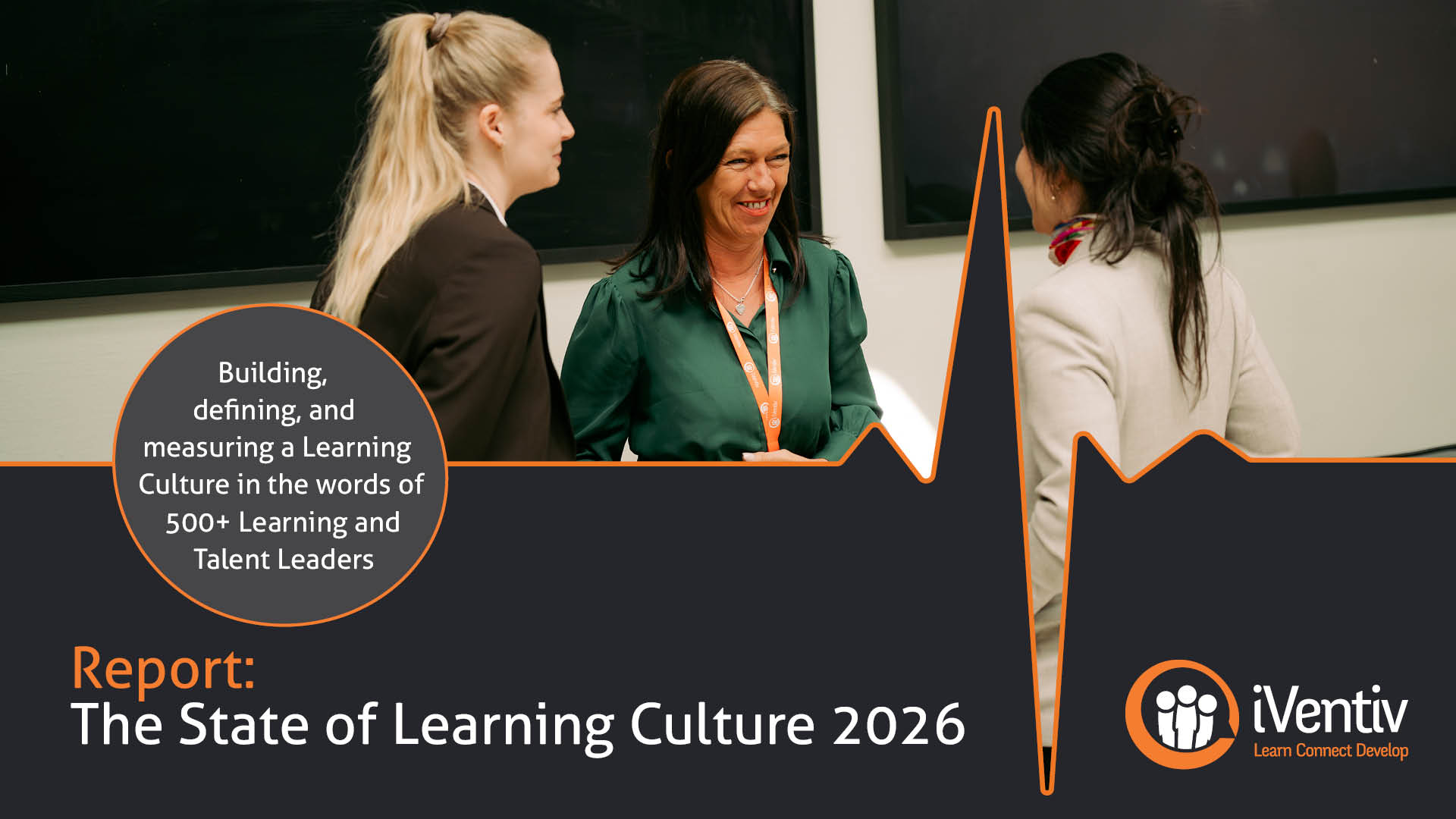
iVentiv’s latest report, The State of Learning Culture 2026, draws on the views of more than 500 Global Heads of Learning and Talent to explore what organisations mean by Learning Culture, why it matters to them, and what they are doing to cultivate and measure it.
Download the full report for the data, executive perspectives, and case studies behind the findings.
Key Takeaways
- 42% of Learning and Talent leaders say Learning Culture is one of their top priorities, making it the fourth-most selected topic out of 51
- Leaders prioritising Learning Culture are also more likely to focus on Change Management, reflecting its role in organisational transformation
- 32% of those focused on Learning Culture also prioritise Learning Platforms, compared with 20% of the overall sample
- Leaders describe both formal learning engagement and learning embedded into everyday work as important elements of Learning Culture
- Leadership buy-in and evidence of business impact remain two of the most common challenges
Learning Culture Remains a Top Priority
Over the past 12 months, 42% of the Learning and Talent Executives surveyed by iVentiv have selected Learning Culture as one of their top priorities.
That puts it fourth among the 51 topics tracked, behind Leadership and Executive Development, Artificial Intelligence, and Reskilling and Upskilling.
The figure is slightly lower than the 47% recorded during the preceding 12 months, but the longer-term direction is clear. Between 2021 and 2024, an average of only 31% of respondents selected Learning Culture as a priority.
Neither company size nor Learning and Talent budget appears to make a significant difference. Instead, the responses suggest that the focus stretches across organisations of very different sizes and levels of Learning investment.
Change Is Driving the Focus on Learning Culture
Change is one of the clearest themes among leaders prioritising Learning Culture.
48% of this group also select Change Management as a priority, compared with 40% of respondents overall.
Some leaders describe building a Learning Culture as part of wider organisational transformation. Others connect it directly with technological change, particularly AI, future skills, and the growing need for employees to adapt continuously.
For many respondents, Learning Culture therefore sits alongside transformation rather than apart from it. Their comments link the topic with how quickly organisations and employees can respond as roles, skills, technologies, and ways of working evolve.
Learning Platforms Are Still Part of the Learning Culture Conversation
Technology also features prominently.
Among leaders prioritising Learning Culture, 32% also identify Learning Platforms as a priority, compared with 20% of the overall sample.
The responses, however, reveal different expectations of what those platforms are there to achieve.
Some leaders are focused on encouraging employees to actively engage with learning opportunities. Others describe a shift towards learning appearing within employees' existing work. They talk about learning in the flow of work, support at the point of need, AI-enabled personalisation, and moving from a training "push" towards a learning "pull".
These perspectives are not necessarily competing. The report shows organisations experimenting with both dedicated learning experiences and development embedded into everyday work.
Who Owns the Learning Culture?
One of the tensions running through the responses is the question of ownership.
Some definitions emphasise individual responsibility. Employees seek out opportunities, dedicate time to development, and take greater control of their learning.
Others place more emphasis on the environment around the learner, including leadership behaviours, workload, opportunities to experiment, psychological safety, and access to relevant development.
That second perspective takes Learning Culture well beyond the direct control of the L&D function.
Leadership is particularly prominent. Respondents talk about driving Learning Culture "from the top", engaging leaders at every level, and creating environments where managers and individual contributors take responsibility for professional development.
Measurement also remains a core challenge. Respondents describe efforts to connect Learning Culture with organisational performance, employee engagement, and business outcomes. Some are looking for stronger evidence of ROI, while others are exploring ways of showing whether investment in Learning Culture contributes to business success.
What is a Learning Culture?
There is no single model of a Learning Culture that Global Heads of Learning and Talent can agree on, but there are some consistent elements in the wider context.
Organisations are changing quickly, the skills they require are evolving, and Learning and Talent leaders increasingly see the ability to learn continuously as part of how their organisations respond.
Based on that, and the evidence in this report, we define a Learning Culture as one in which individuals are empowered to develop continuously, supported by an organisational environment that provides the resources, opportunities, and encouragement for learning, in pursuit of individual and organisational performance.
Download The State of Learning Culture 2026 to explore the full findings, including data from more than 500 Learning and Talent leaders and case studies from Fanatics, Marsh, and DEKRA.
Frequently Asked Questions
What is a Learning Culture?
Definitions vary among Learning and Talent leaders. Respondents describe Learning Cultures in terms of continuous development, employee ownership, learning in the flow of work, leadership support, and organisational environments that encourage people to learn and experiment. The iVentiv Learning Culture report defines a Learning Culture as one in which individuals are empowered to develop continuously, supported by an organisational environment that provides the resources, opportunities, and encouragement for learning, in pursuit of individual and organisational performance.
How important is Learning Culture to L&D leaders in 2026?
42% of Learning and Talent Executives surveyed over the past 12 months say Learning Culture is one of their top priorities. That makes it the fourth-most selected topic out of the 51 areas tracked by iVentiv.
What is driving the focus on Learning Culture?
The responses link Learning Culture closely with organisational change, AI, Reskilling and Upskilling, and the Future of Work. Leaders prioritising Learning Culture are also more likely to identify Change Management as a major focus.
What challenges are Learning and Talent leaders experiencing with Learning Culture?
Common themes include employee engagement, leadership buy-in, finding time for learning, embedding development into everyday work, and demonstrating measurable impact on individual and organisational performance.
What are some examples of a learning culture?
Learning culture examples vary between organisations. In the iVentiv research, leaders describe cultures where employees actively seek out development opportunities, learning is embedded into everyday work, managers support professional development, and technology provides relevant learning at the point of need. Other examples include employee-led Learning days, experiential development programmes, coaching, and opportunities for people to share expertise with colleagues.
What is a learning culture framework?
A learning culture framework is a way of describing the different factors that contribute to continuous learning across an organisation. The responses from Learning and Talent leaders suggest that these factors can include employee ownership, leadership behaviour, access to learning opportunities, technology, learning in the flow of work, psychological safety, and links between development and organisational performance. Different organisations place different levels of emphasis on each element.
What does a learning culture in the workplace look like?
A learning culture in the workplace can take several forms. Some organisations focus on encouraging employees to make time for formal learning, while others are embedding learning directly into everyday work. Leaders also describe workplaces where managers advocate for development, employees share knowledge, people have opportunities to experiment, and learning becomes part of how work is completed rather than a separate activity.
What is learning culture in education?
In education, a learning culture generally refers to an environment in which learning, curiosity, development, and knowledge-sharing are actively supported. The concept overlaps with workplace learning culture in areas such as continuous improvement, shared responsibility for learning, experimentation, and the role of leaders in shaping the environment. iVentiv's 2026 research focuses specifically on Learning Culture within large organisations and workplaces rather than educational institutions.
Why is a learning culture important?
Learning and Talent leaders increasingly connect Learning Culture with their organisations' ability to respond to change. In iVentiv's research, leaders focusing on Learning Culture are also more likely to prioritise Change Management, Reskilling and Upskilling, and technologies that support learning. Their responses suggest that Learning Culture is being viewed as part of how organisations develop new skills, adapt to technological change, and support continuous development.