The State of Learning Culture 2026: Download the Report

To see the full iVentiv report on Learning Culture in corporate L&D and Talent, please submit the form below. You can then view and download the full report on the next page, including case studies on Fanatics, Marsh, and DEKRA.
 
1 Start 2 Complete

More Insights

Learning Culture is one of those ideas that can be easy to recognise and much harder to define.

For some Learning & Development leaders, it means employees actively seeking out opportunities to learn. For others, it means embedding development into the flow of work, creating an environment for experimentation, or encouraging managers and leaders to take greater ownership of learning.

Despite those different definitions, Learning Culture remains firmly on the agenda for senior Learning and Talent leaders.

iVentiv’s latest report, The State of Learning Culture 2026, draws on the views of more than 500 Global Heads of Learning and Talent to explore what organisations mean by Learning Culture, why it matters to them, and what they are doing to cultivate and measure it.

For decades, Learning & Development has been organised around a familiar production model; a business identifies a need, L&D designs a programme, content is created, employees complete it, and despite a genuine desire to measure business impact, success is often reported through attendance, completion rates and satisfaction scores. But the advent of AI is beginning to dismantle that model, not because it can generate a course, produce a video or build a presentation faster, but because it allows L&D to move beyond producing learning assets and take greater responsibility for workforce performance.

Few leaders are exploring this shift as practically as Julie Stone, Chief Learning Officer and Group VP at TTEC. Drawing on more than 20 years of experience across global organisations, Julie is helping to embed AI, adaptive learning and performance-based development into the flow of work. Her perspective challenges many of the maligned assumptions that have shaped the way L&D is perceived for decades, particularly the idea that the function’s primary role is to produce training content.

In this blog, we explore Julie’s view of an AI-enabled L&D function that is faster, more adaptive and more commercially relevant, while remaining deeply human. It is a vision in which AI takes on repetitive and production-heavy work, enabling Learning professionals to focus on judgment, coaching, context and the complex work of changing behaviour. Watch it now.

At the start of 2026, we shared the top priorities for Global Heads of L&D, Talent, and Executive Development in the annual iVentiv Pulse Report

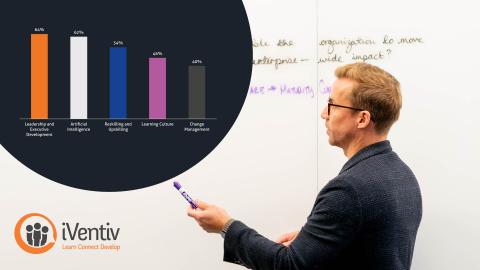
Six months into 2026, we can now share a brief update on the top priorities as selected by attendees at iVentiv events so far this year. Already, more than 250 senior L&D and Talent leaders in multinational organisations have told iVentiv about the most important topics for their function right now.

In this blog, you can see the top topics, with quotes from survey respondents and analysis on the trends behind the numbers.

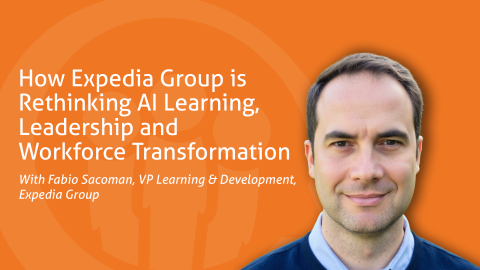
Artificial intelligence is reshaping the workplace faster than most organisations can comfortably adapt to. For Chief Learning Officers and Talent Leaders, the challenge is no longer whether AI will transform work, but how to prepare people for that transformation in a meaningful, sustainable way.

During a recent iVentiv interview, Fabio Sacoman (VP, Learning & Development) shared how Expedia Group is approaching AI capability building across its global workforce. The discussion explored everything from AI literacy and organisational agility to leadership transformation, learning measurement, and the future of the LMS itself.

One message emerged repeatedly throughout the conversation: traditional approaches to Learning & Development are no longer sufficient for the pace of change organisations now face. Watch the interview now to find out how Expedia Group is adapting its practice to keep up with that ever increasing pace of change.

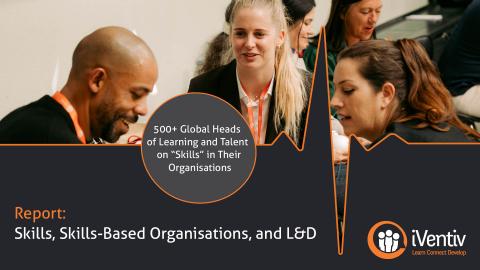
For several years, Learning and Talent leaders have talked about skills-based organisations, skills marketplaces, skills taxonomies, reskilling strategies, upskilling at work, and the shortening half-life of skills. The question is whether all that language reflects a passing trend or a deeper shift in the way organisations and employees learn.

iVentiv’s latest report, Skills, Skills-Based Organisations, and L&D, suggests that ‘skills’ and their associated buzzwords have become often career-defining priorities for senior Learning and Talent leaders.

Based on survey responses from more than 500 Heads of Learning, Talent Management, and Executive Development, the report explores how organisations are approaching upskilling and reskilling the workforce, why AI is accelerating the skills agenda, and where skills-based organisations are beginning to succeed.

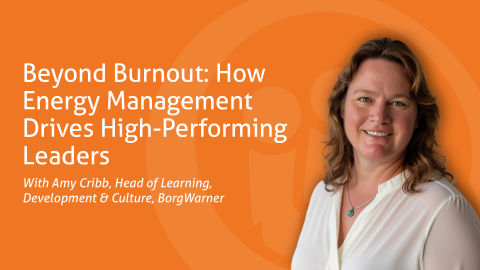
What does sustainable leadership really look like in today’s high-pressure business environment? For Amy Cribb, Head of Learning, Development & Culture at BorgWarner, the answer starts with a mindset shift: resilience alone is no longer enough.

In this conversation with iVentiv, Amy explores why organisations need to rethink burnout, recovery, and wellbeing as critical leadership capabilities rather than employee “benefits”. Reflecting on BorgWarner’s journey through intense transformation, post-pandemic pressures, and rapid industry change, she shares how a deeply human approach to leadership development helped spark meaningful cultural change across the organisation. Watch our Interview with Amy now.

Earlier this year, we released iVentiv’s 2026 Predictions video which set out a clear direction of travel for Learning, Leadership, and Talent functions based on insights shared from iVentiv’s own Hannah Hoey (Content Director), Kristy Kitson (L&D Strategist), and Richard Parfitt (Marketing Director). Skills-based organisations, AI governance, and evolving learning cultures dominated the conversation, but predictions only really matter when tested against reality.

A few months on, and following Executive Knowledge Exchanges across Paris, Atlanta, New York, and London, a more nuanced picture is emerging. The themes themselves have not dramatically changed but the way organisations are engaging with them has. What we’re seeing now is how the conversation has shifted from what matters to what works. Watch the video now.

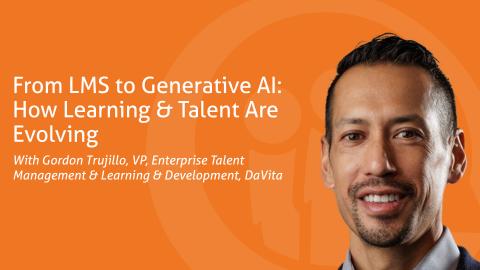
As AI reshapes the workplace at unprecedented speed, learning leaders are being called to rethink not just how learning is delivered, but how work itself is structured.

In this conversation with Gordon Trujillo, VP of Enterprise Talent Management & Learning & Development at DaVita, we explore how AI is transforming learning, leadership, and organisational design, and why curiosity, experimentation, and human capability remain at the heart of it all. Watch the interview now.

In today’s rapidly evolving business landscape, the ability to learn continuously is no longer a competitive advantage, it is a necessity. Yet many organisations still rely on traditional training models that struggle to keep pace with change.

So, what does it really take to build a learning culture that lasts?

In this interview, Laura Medina Escolano, Head of Global Learning & Development at DEKRA, explores the shift from training programmes to habit-driven learning. She shares why curiosity must become a daily behaviour, how leaders shape learning through small actions and why creating a safe environment for experimentation is critical to success. Watch the interview now.

Across organisations, leadership development has long been treated as an individual pursuit. High-potential programmes, competency frameworks, and executive coaching are all designed to elevate the individual leader. Yet as organisations face increasing complexity and pressure to perform, Charles Jennings and Tue Krabbe-Juelsbo ask a fundamental question: what if the true unit of value is not the individual at all, but the team? 

Watch our interview with Charles Jennings, Co-Founder, 70:20:10 Institute, and Tue Krabbe-Juelsbo, Senior Lead, Head of Leadership & People Development, Nuuday, to get their take on the power of atomic teams in your organisation, based on their upcoming research.

Pages