Submitted by Richard.Parfitt on
Updated April 2026
By Richard Parfitt (Marketing Director, iVentiv and author of the iVentiv Budget Report)
As an L&D leader, you are certainly not alone in wondering if your budget matches up to the expectations placed on you and your team. It’s no surprise that 60% of CLOs say measuring ROI is one of their top priorities.
But what makes a good L&D budget in 2026? How much should your organisation be spending? What figures should you be benchmarking against?
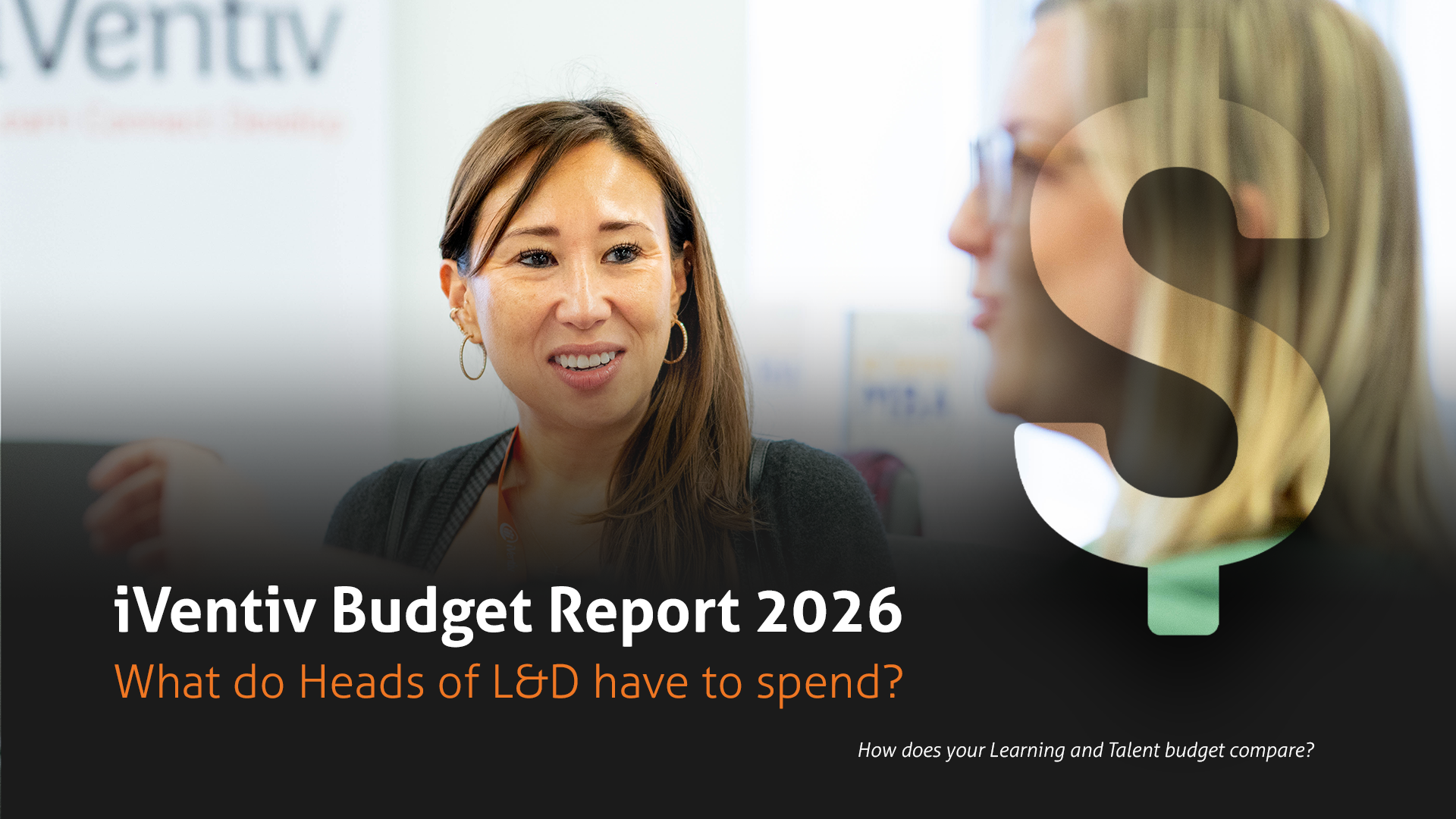
Download the iVentiv Budget Report today for a detailed breakdown of how much senior Learning and Talent Executives have at their disposal in 2026, including average budget per employee. The report also lays out what L&D’s biggest spenders and biggest employers are prioritising.
Key Takeaways
- The average L&D budget for senior leaders in 2026 is $11.8 million, with significant variation across organisations
- Spend per employee differs widely, from over $1,700 in smaller organisations to under $300 in larger enterprises
- CLOs with the largest budgets prioritise Future of Work, Skills, and Learning Platforms
- The biggest employers place more emphasis on AI as a core L&D priority
What is the Average L&D Budget in 2026?
In terms of the headline number, the average L&D executive holds a budget of $11.8 million.
That’s based on survey responses from almost 500 global Heads of Learning & Development and Talent, from organisations with tens of thousands of employees on average. Each respondent completed a survey between April 2025 and March 2026 ahead of an iVentiv event for senior Learning and Talent leaders.
Respondents were asked to share the budget under their specific control, so that number may reflect the discretionary budget under the control of the individual Chief Learning Officer, rather than the absolute total spend on L&D.
That said, the spread is revealing, with around 50% of L&D leaders holding a budget of $1 million or more, and 6% over $100 million.
What is the Average L&D Spend Per Employee?
Survey respondents were also asked to share the number of employees or internal customers under their remit. Based on those responses, the average Learning spend per employee is $902.
Once again, there is a wide range of spending levels. Executives responsible for fewer than 5,000 employees manage an average total budget of $4.3 million, but a spend per employee of $1,735. In larger organisations, employing over 100,000 people, the average budget is over $25 million, but the spend per employee is $259.
Where do CLOs with the Biggest Learning & Development Budgets Spend Their Money?
What the report also shows is that the Executives with the biggest budgets are more likely to prioritise certain topics compared to their less well-resourced peers. Respondents with budgets of $100 million+ were more likely to be focusing on:
- The Future of Work
- Reskilling and Upskilling
- Learning Platforms (LMS/LXP)
Learning leaders with the biggest budgets are concerned with designing work and the “skills needed for the future”, driving culture change in a scalable way amidst “persistent change”.
Where do the Biggest Employers Spend Their Learning & Development Budgets?
Pricing for many Learning products and platforms is based on a price per user, so it is worth asking where the biggest employers are most likely to focus their efforts and their money as well.
When it comes to how the biggest employers spend their Learning & Development budgets, Chief Learning Officers and Heads of Learning & Talent are more likely to focus on three key areas:
- Artificial Intelligence (AI)
- Learning Platforms (LMS/LXP)
- Future of Work
The difference is especially striking when it comes to AI, with 74% of L&D budget holders at organisations with more than 100,000 employees saying that Artificial Intelligence is a top priority compared to only 54% at organisations with fewer than 5,000 employees.
Benchmark Your L&D Budget: Download the iVentiv Budget Report
The full iVentiv Budget Report includes a detailed breakdown of the different budgets managed by Learning & Development Executives. That includes figures on the average Learning budget per employee in organisations of different sizes, and how the top priorities for Chief Learning Officers change depending on the size of their budget and workforce.
Download the report for free today.
Frequently Asked Questions
What is an L&D budget?
An L&D budget (Learning & Development budget) refers to the total amount an organisation allocates to training and development activities over a set period, typically annually. This includes spending on leadership development, learning platforms (LMS/LXP), external providers, internal programmes, and workforce development initiatives. Understanding what an L&D budget is helps organisations plan how they invest in skills, performance, and long-term capability building.
What is a good learning and development budget in 2026?
A good learning and development budget depends on organisational size, industry, and strategic priorities. However, current benchmarks suggest that the average L&D budget for senior leaders is around $11.8 million. Rather than focusing solely on total budget, organisations should assess whether their budget for learning and development aligns with business goals, supports key initiatives like Artificial Intelligence and leadership development, and delivers measurable impact.
What is the average L&D budget per employee?
The average L&D budget per employee is approximately $902, based on recent data from global Learning & Development leaders. However, this figure varies significantly. Smaller organisations often invest more per employee, sometimes exceeding $1,500, while larger enterprises may spend closer to $250 per employee. Benchmarking your L&D spend per employee is essential to understand whether your investment is competitive and effective.
How do you calculate a training and development budget per employee?
To calculate a training and development budget per employee, divide your total L&D budget by the number of employees or learners in your organisation. For example, if your annual L&D budget is $10 million and you support 10,000 employees, your Learning & Development budget per employee would be $1,000. This metric is widely used to compare Learning budgets across organisations and to benchmark investment levels.
What should be included in a learning budget?
A comprehensive learning budget should include all costs associated with training and development. This typically covers:
- Leadership development programmes
- Learning platforms and technology (LMS/LXP)
- External training providers and consultants
- Internal programme delivery and resources
- Content creation and curation
- Workforce development initiatives
A well-structured L&D budget ensures that spending is aligned with both immediate training needs and long-term organisational capability.
How can you benchmark L&D budgets effectively?
Benchmarking L&D budgets involves comparing your spending against similar organisations in terms of size, industry, and geography. Key metrics include total Learning budget, L&D spend per employee, and investment in priority areas such as leadership development. Effective benchmarking goes beyond numbers. It also considers how budgets are allocated and whether spending supports strategic outcomes like reskilling, culture change, and digital transformation.
How does L&D spend impact ROI and business performance?
L&D spend plays a critical role in driving organisational performance, but ROI depends on how effectively the budget is used. Investment in training and development can improve employee engagement, productivity, retention, and leadership capability. To maximise ROI, organisations should align their Learning budgets with business priorities, focus on applied learning, and measure outcomes such as performance improvement and skill acquisition rather than just participation rates.